
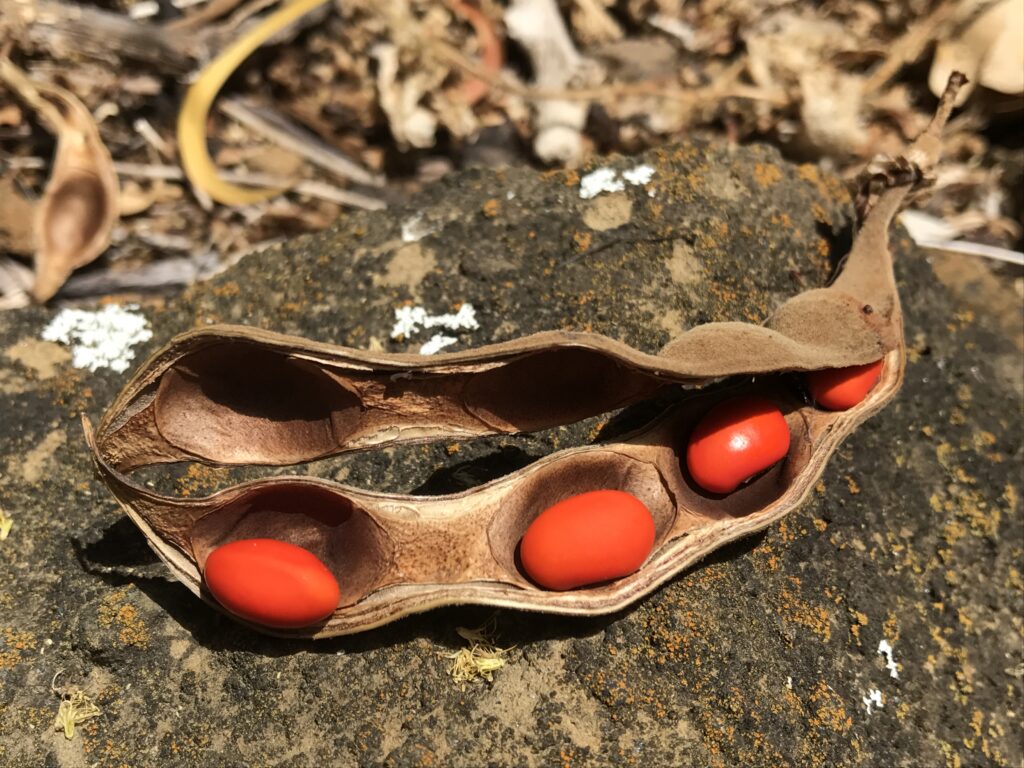
Fruit Phenology
Phenology is the study of seasonal biological events such as flowering and fruiting—is central to the success of seed collecting, restoration, and plant and animal conservation.
Knowing the right time of year to collect seeds increases efficiency, improves restoration outcomes, and ensures that conservation efforts are effective. Despite its importance, phenology data for Hawaiʻi’s native plants has remained scattered and incomplete. Previous studies were limited to small groups of species or single habitats, leaving practitioners without a statewide reference.
Laukahi Network members observed that a seed collection record is an indicator of when a plant fruited. They recognized the potential application of using the seed bank records from the 2023 ex situ gap assessment to help bridge a knowledge gap in phenology and develop a practical, shared dataset for the community. We are aware this has the potential to be biased and a tool like this could potentially perpetuate a bias, but it’s usefulness and practicality outweigh that risk at this time.
From the 2023 ex situ assessment, this fruit phenology guide reflects from 14 seed banks, with 37,569 seed accessions that meet criteria to be included. It represents ~1,032 native taxa (~74% of the flora). Overall, we hope it will show optimal months to collect fruits and seeds, based on decades of successful field collections.

Laukahi has a growing number of partners that help to implement the Hawai‘i Strategy for Plant Conservation by supporting our initiatives, conducting field work to protect native habitats, propagate and secure propagules in ex situ facilities, and do research to inform strategies.
Mahalo to all our partners!